The Artist
Few artists have captured the charm of the ancient world quite like Lawrence Alma-Tadema. Born in the 19th century in the Netherlands, he became one of the most celebrated Victorian painters.
Alma-Tadema built a legacy through his breathtakingly detailed scenes of antiquity, full of marble, sunlight, and the timeless elegance of Roman and Greek life. He is part of the academic and Victorian neo-classic art movements.
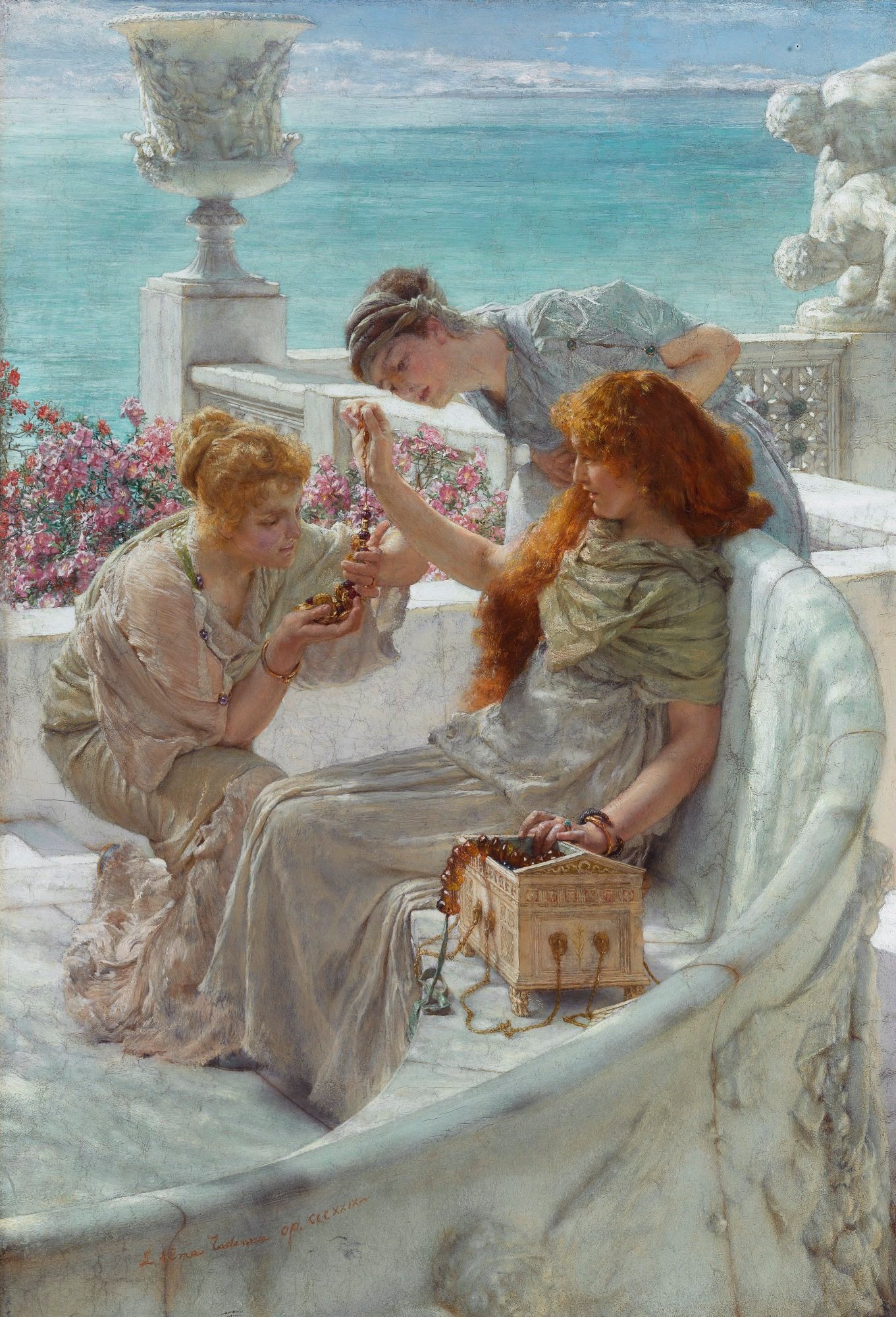
The slider shows some of his most wondrous artworks in order : “The Kiss”,“The Roses of Heliogabalus”,“Ask me no more”, “fortune’s favourite”, “In a rose garden”.
The Paintings
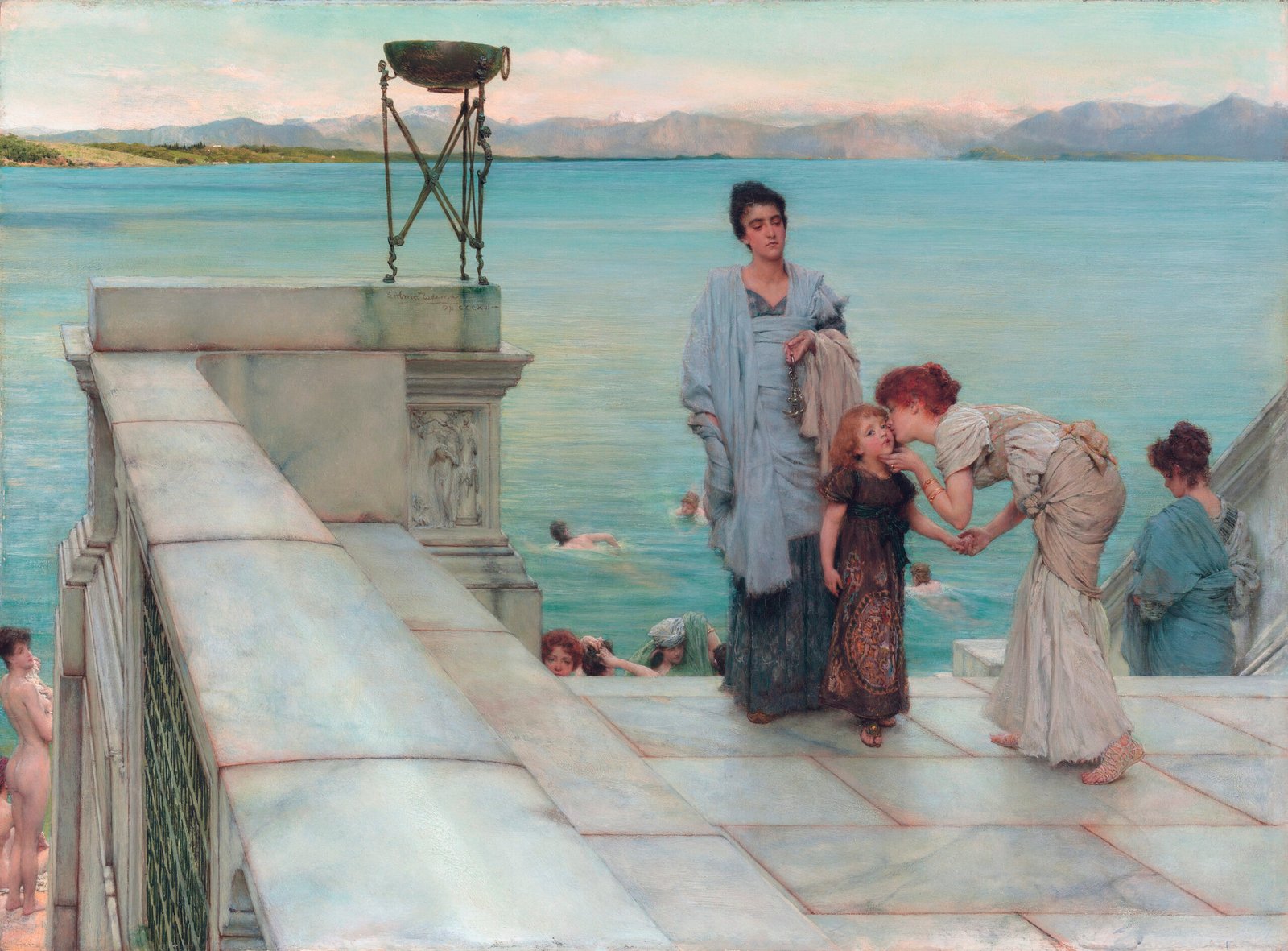
From the heartwarming kiss of a mother, to the luminous white marble in the foreground and the serene blue expanse of the sea in the background, Alma-Tadema’s “A Kiss” envelops the viewer in a world of ancient beauty and emotional intimacy.
Contrary to much of Alma-Tadema’s work, this painting does not depict a mythological or historical narrative, but rather captures an imagined everyday scene in antiquity full of emotion.
The painting captures the essence of Alma-Tadema’s artistic identity, his use of vivid depictions of the sea and ancient marble architecture. This visual identity would go on to inspire the work of John William Godward.
"A Kiss" by Lawrence Alma Tadema
“From the Skyline to the Shore
The Sun’s Byzantine Splendour
Had sun-kissed her motherly Care
With a bliss wonderfully Rare”
"Ask me no more" by Lawrence Alma Tadema
“Our Destiny is forever sealed
The devilry fate will never yield
But your deep wounds I forever healed”
In this painting Lawrence Alma Tadema explores the story of an impossible love, the tragic story of Pyramus and Thisbe, two lovers from ancient Babylonia, who must keep their love hidden from their families.
Despite secretly meeting through a wall between their homes, the secrecy became unbearable, such as they tried running away together and meet in secret near a white mulberry tree.
Thisbe arrived first but fled in fear from a blood-stained lioness, dropping her veil. The lioness tore it, leaving it bloody. When Pyramus found the veil, he thought Thisbe was dead and took his own life. His blood turned the white mulberries dark red.
The gods, moved by their fate, made all the mulberries turn to red. This tragic tale directly inspired Romeo and Juliet and Tadema’s painting does a wondrous job at depicting the tragedy of this impossible love. You can contact me if you wish to receive the painting files by e-mailing me.
The Gallery